
-
Woodards House
Level 1, 47 Waymouth Street
Adelaide, SA 5000, Australia - +61 8 8410 5222
- [email protected]
If you are researching English language study in Australia, you will see the word ELICOS everywhere: on school websites, on visa forms, and in government documents.
Most pages define it in one sentence and move on. This guide goes further. It explains what ELICOS is, what it means for your visa, what rights you have as a student, what different course types there are, and how to choose a provider that is the right fit.
ELICOS stands for English Language Intensive Courses for Overseas Students.
It is the official Australian Government term for full-time English language courses delivered to international students studying in Australia on a student visa. The word “intensive” is defined specifically: a minimum of 20 scheduled face-to-face contact hours per week.
Any English language course in Australia that is registered for international students is, by definition, an ELICOS course, from a one-week General English programme to a 48-week IELTS preparation course.
Australia has one of the most regulated international education systems in the world. The ELICOS classification exists to ensure that:
Every ELICOS provider in Australia must be registered on the Commonwealth Register of Institutions and Courses for Overseas Students (CRICOS) and meet the ELICOS Standards 2018, a set of quality requirements that sit within the broader Education Services for Overseas Students (ESOS) Framework.
This regulatory structure is one of the strongest features of Australia’s education system. When you enrol in a CRICOS-registered ELICOS course, you are not just buying a class. You are entering a system with legal protections, quality guarantees, and government oversight.
ELICOS Standards 2018, Australian Government Department of Education
ELICOS is a category, not a single course. Within it, there are several distinct course types:
The most common ELICOS course. Develops all four language skills: speaking, listening, reading, and writing across multiple levels from Elementary to Advanced. Covers grammar, vocabulary, pronunciation, and communication in real-life contexts. Available from 1 week onward.
Best for: Students building foundational English for work, travel, social communication, or as a starting point before exam preparation.
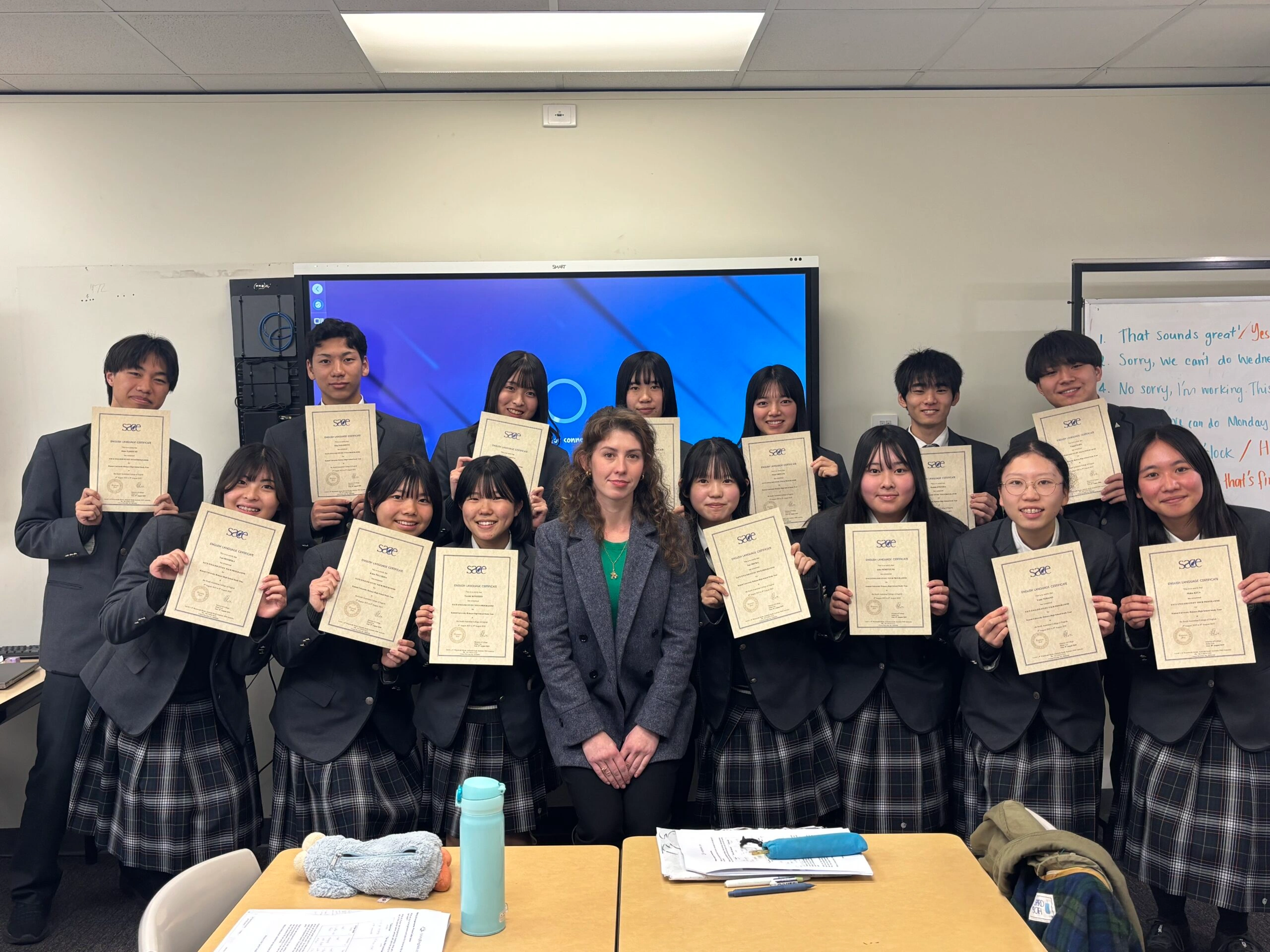
General English courses at SACE
Prepares students specifically for the International English Language Testing System exam. Teaches test structure, strategies, timing, and full practice under exam conditions. Requires Upper Intermediate entry level (approximately IELTS 5.0).
Best for: Students who need a specific IELTS band score for university entry, migration, or professional registration in Australia.
Prepares students for Cambridge English qualifications: FCE (First Certificate in English), CAE (Certificate in Advanced English), or CPE (Certificate of Proficiency in English). Internationally recognised and accepted by universities and employers worldwide.
Best for: Students seeking a globally recognised English qualification.
Cambridge examination courses at SACE
Develops the academic English skills needed for university study: academic reading, critical thinking, essay writing, oral presentations, note-taking, and research skills. Successful completion of ETS allows eligible students to progress into partner universities and TAFEs without needing to sit an IELTS test, subject to entry requirements.
Best for: Students planning to enter an Australian university or TAFE and needing both the language level and the academic skills to succeed.
English for Tertiary Study at SACE
Develops English for professional workplace contexts: business communication, writing, presentations, and industry-specific vocabulary.
Best for: Students planning to work in an English-speaking environment or international business context.
An internationally recognised qualification in English language teaching for adults. Not a language learning course; it is a professional qualification for people wanting to teach English.
Best for: Advanced English speakers wanting to begin or develop a teaching career.
ELICOS courses are open to international students from any country. For General English courses at SACE, the minimum age is 13 years. Some courses have higher age requirements: SACE’s IELTS and examination courses require students to be 16+, and CELTA requires students to be 18+.
There is no English language test required to enrol in a General English ELICOS course. On your first day, you will sit a placement test that determines your current level and places you in the correct class.
If your ELICOS course is 13 weeks or less, you may be able to study on a Tourist Visa (Subclass 600). This depends on individual circumstances. Check with your visa agent or the Department of Home Affairs before assuming this applies.
For any ELICOS course longer than 13 weeks, you need a Student Visa (Subclass 500). This is the main student visa for international students in Australia.
To apply for a Student Visa (Subclass 500) for ELICOS:
Work rights on a Student Visa: Student Visa holders can currently work up to 48 hours per fortnight during study and unlimited hours during scheduled course breaks. Work rights are subject to legislative change. Always check the most current conditions before making plans. Visit Student Visa Subclass 500, Study Australia and Department of Home Affairs for the latest information.
CRICOS, the Commonwealth Register of Institutions and Courses for Overseas Students, is the Australian government’s official register of education providers and courses approved to enrol international students.
Only CRICOS-registered providers can legally enrol international students on student visas.
Every course a CRICOS provider delivers has its own CRICOS course code. When you receive your Confirmation of Enrolment (eCoE), it includes this code, which you then use in your visa application.
Before you enrol anywhere, verify the provider’s CRICOS status. You can search the public CRICOS register at cricos.teqsa.gov.au using the provider name or CRICOS number.
SACE’s CRICOS number is 00094M.
The Education Services for Overseas Students (ESOS) Framework is an Australian federal law that protects international students. As an ELICOS student, you have specific legal rights:
Tuition fee protection. Your fees are protected by the Tuition Protection Service (TPS). If your provider closes or cannot deliver your course, TPS will either place you in an equivalent course at another provider or refund your unused tuition fees.
Quality standards. Your provider must meet the ELICOS Standards 2018, which cover teaching quality, student support, complaints procedures, and course delivery.
Information rights. Your provider must give you clear information about your course content, delivery methods, assessment, and all fees before you enrol.
Support services. You are entitled to academic and welfare support throughout your course.
Complaints and appeals. You have the right to a formal complaints and appeals process if you are unhappy with any part of your course.
Agent commission ban (2026). The National Code was changed in January 2026 to ban the payment of education agent commissions for onshore student transfers. This removes financial reasons for agents to move students between schools, which is a direct protection for enrolled students.
ESOS Framework student rights, Australian Government Department of Education
ELICOS tuition fees vary by provider, course type, and city. As a guide, General English courses typically start from around AUD 250 per week, with IELTS and exam preparation courses at the higher end of the range.
For SACE’s current course fees, visit sace.edu.au/fees or enquire directly.
Additional costs to budget for:
Sydney and Melbourne providers typically charge at the higher end of the fee range. Adelaide providers offer competitive tuition fees alongside significantly lower living costs, making the total cost of studying in Adelaide substantially less than in the eastern capitals.
Not all ELICOS providers are equal. Use this checklist before enrolling:
Verify CRICOS registration – Check the provider’s CRICOS number on the official register. Never enrol with an unregistered provider.
Check course contact hours – All ELICOS courses must provide at least 20 face-to-face contact hours per week. Some providers offer more; SACE offers General English at 20, 25 or 16 hours per week, depending on course type.
Ask about class sizes – Smaller classes mean more individual attention and more speaking time per student. SACE averages 14 students per class with a maximum of 18.
Confirm placement testing – Reputable providers check your English level before placing you in a class. You should be at the right level from day one.
Check progress monitoring – Good providers check student progress regularly throughout the course, not only at the end. SACE conducts formal progress tests every four weeks.
Look at pathway agreements – If you plan to enter a university or TAFE after your English course, confirm the provider has direct entry agreements with the institutions you want to attend.
Check accreditations beyond CRICOS – Additional accreditations, such as English Australia membership or Cambridge authorised examination centre status, indicate that providers meet standards beyond the minimum.
ELICOS stands for English Language Intensive Courses for Overseas Students. It is the official Australian Government term for full-time English language courses delivered to international students. All ELICOS courses must provide a minimum of 20 scheduled face-to-face contact hours per week.
No. General English is one type of ELICOS course. ELICOS is the broader category that includes General English, IELTS Preparation, Cambridge Examination preparation, English for Academic Purposes, Business English, and other intensive English programmes for international students.
If your course is longer than 13 weeks, yes: you need a Student Visa (Subclass 500). For courses of 13 weeks or less, a Tourist Visa may be sufficient in some cases, but confirm this with the Department of Home Affairs or a registered migration agent before applying.
CRICOS is the Commonwealth Register of Institutions and Courses for Overseas Students, the Australian government’s official register of approved education providers. Only CRICOS-registered providers can legally enrol international students on student visas. Always verify a provider’s CRICOS registration before enrolling.
Under the ESOS Framework, you have the right to tuition fee protection through the Tuition Protection Service, quality teaching that meets the ELICOS Standards 2018, clear information about your course before enrolling, academic and welfare support, and a formal complaints and appeals process.
Fees vary by provider, city, and course type. General English courses typically start from around AUD $250 per week; exam preparation courses are generally at the higher end. For SACE’s current fees, visit sace.edu.au/fees.
If you hold a Student Visa (Subclass 500), you can currently work up to 48 hours per fortnight during your course and unlimited hours during scheduled course breaks. Work rights are subject to change. Check the latest conditions at studyaustralia.gov.au before making plans.
No English test is required to enrol. On your first day, you will complete a placement test that determines your current level and places you in the appropriate class, from Elementary through to Advanced.
The Education Services for Overseas Students (ESOS) Framework is an Australian federal law that governs the delivery of education to international students. It sets quality standards for providers, protects student tuition fees, and defines student rights. All CRICOS-registered providers operate under the ESOS Framework.
ELICOS courses teach English as the subject. University studies use English as the language of instruction for other subjects. Many international students complete an ELICOS course first to reach the English level required for university entry.
SACE has been delivering CRICOS-registered ELICOS courses in Adelaide since 1987. We offer General English, IELTS Preparation, Cambridge Examination courses, English for Tertiary Study, Business English, and Cambridge CELTA teacher training.
All students complete a placement test on day one. Progress is monitored every four weeks. Average class size: 14 students.

Please Login To Add Wishlist