

-
Woodards House
Level 1, 47 Waymouth Street
Adelaide, SA 5000, Australia - +61 8 8410 5222
- [email protected]
Picture your students in a morning English class, and spotting sea lions on Kangaroo Island by Friday afternoon. Not a fantasy. That is a SACE study tour in Adelaide.
Choosing a study tour destination is a real responsibility for schools and programme coordinators. You need to balance academic outcomes with genuine cultural immersion and be confident that your students are safe, supervised, and well supported throughout their stay.
A study tour with the South Australian College of English (SACE) delivers on all three. And in 2026, Adelaide offers something that Sydney and Melbourne simply cannot match: a compact, welcoming city where student groups are genuinely part of the community, not just visitors passing through.
A SACE study tour is a customisable ELICOS (English Language Intensive Courses for Overseas Students) programme designed for groups from schools, universities, or professional organisations. ELICOS is a nationally regulated course category set out in the ELICOS National Standards, and it combines focused English language tuition in the mornings with educational and cultural activities in the afternoons.
Every part of the programme has a purpose. If the afternoon activity is a visit to the Adelaide Central Market, the morning lesson focuses on food vocabulary, everyday transactions, and social interaction. Language learning does not stop when the classroom bell rings.
SACE has been hosting international students in Adelaide since 1987. Nearly four decades of experience mean our study tour team understands exactly what institutional coordinators need: clear programme structure, reliable welfare support, and measurable outcomes for every student in the group.
Sydney and Melbourne are well-known. For study tour groups, however, bigger cities are not always better cities. Adelaide has built a compelling case of its own.
#9 in the world for liveability. In 2025, the Economist Intelligence Unit ranked Adelaide 9th on its Global Liveability Index, scoring highly for safety, education, healthcare, and culture. Australia was the only country in the world to place three cities in the global top 10. For parents and school boards, these rankings carry real weight.
16% more affordable than Sydney. Living costs in Adelaide are approximately 16% lower than in Sydney. For a standard 3-week study tour, this cost-efficiency allows institutions to allocate more budget toward premium experiences, such as private guided tours or high-quality private transport, without increasing the total price per student. Choosing Adelaide ensures your budget is spent on the student experience, not city-centre overheads.
The “20-Minute City.” Adelaide’s city centre is compact, walkable, and easy to navigate. Students can get from their school to the Central Market, the tram to the beach, or a favourite cafe in under 20 minutes. For students arriving in a new country for the first time, that scale is far less overwhelming than larger cities.
Authentic English immersion. Adelaide has a smaller international student density than Sydney or Melbourne. This means students use English more consistently in everyday situations, such as at the bus stop, the market, or the cafe. When language practice is the goal, daily exposure matters.
Safe and family-friendly. Adelaide is widely regarded as one of Australia’s safest and most family-friendly cities. Student groups are visible, easily supervised, and warmly welcomed. For school boards and parents, this is one of the most important factors in the decision.
Direct flight connections. Adelaide receives direct flights from major Asian hubs, simplifying logistics for international school groups and reducing travel fatigue on arrival.
University aspiration on the doorstep. Guided campus tours of the University of Adelaide and Flinders University give secondary students a clear picture of future academic pathways in Australia, making the study tour experience academically motivating as well as linguistically valuable.
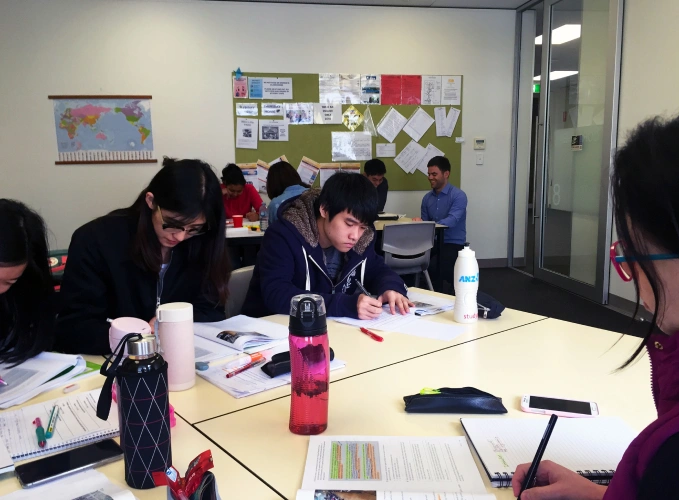
Each morning, students attend 15 to 20 hours of English tuition per week, built around task-based learning. Lessons connect directly with that day’s afternoon activity. If the group is visiting Cleland Wildlife Park in the afternoon, the morning lesson focuses on Australian wildlife vocabulary, description, and interview-style conversation practice. Language students practise in class is the language they use in the real world within hours.
On arrival, every student completes a full English placement assessment. This ensures that students from different proficiency levels within the same group, from Elementary to Advanced, are placed correctly from day one and make genuine, measurable progress throughout the programme.
SACE’s welfare framework is one of the main reasons institutional coordinators return year after year. Every SACE study tour programme includes:
This structure gives schools, parents, and students confidence from the first day of the programme to the last.
Australian National Code for International Students (Department of Education)
South Australia offers experiences that cannot be replicated elsewhere in Australia. SACE study tour excursions include:
Cleland Wildlife Park. Rather than a simple visit, students engage in a ‘Citizen Science’ workshop. After learning biology-based vocabulary in the classroom, students interview park rangers about conservation efforts, practising formal questioning and note-taking in a real-world environment.
Kangaroo Island. A short ferry crossing from the mainland leads to one of the world’s great wildlife sanctuaries. Sea lions, koalas, kangaroos, and echidnas all live freely in their natural habitats. There is nothing else like it anywhere else in Australia.
Adelaide Central Market. Over 150 stalls in a market that has operated continuously since 1869. This is an excellent setting for real, unscripted English practice in a social environment. Students carry out transactions, ask questions, and hold conversations with local vendors in an authentic context.
South Australian Museum and East End. These cultural and arts institutions provide context for Aboriginal history and South Australian heritage. Guided activities are built into the visit to keep English use structured and purposeful.
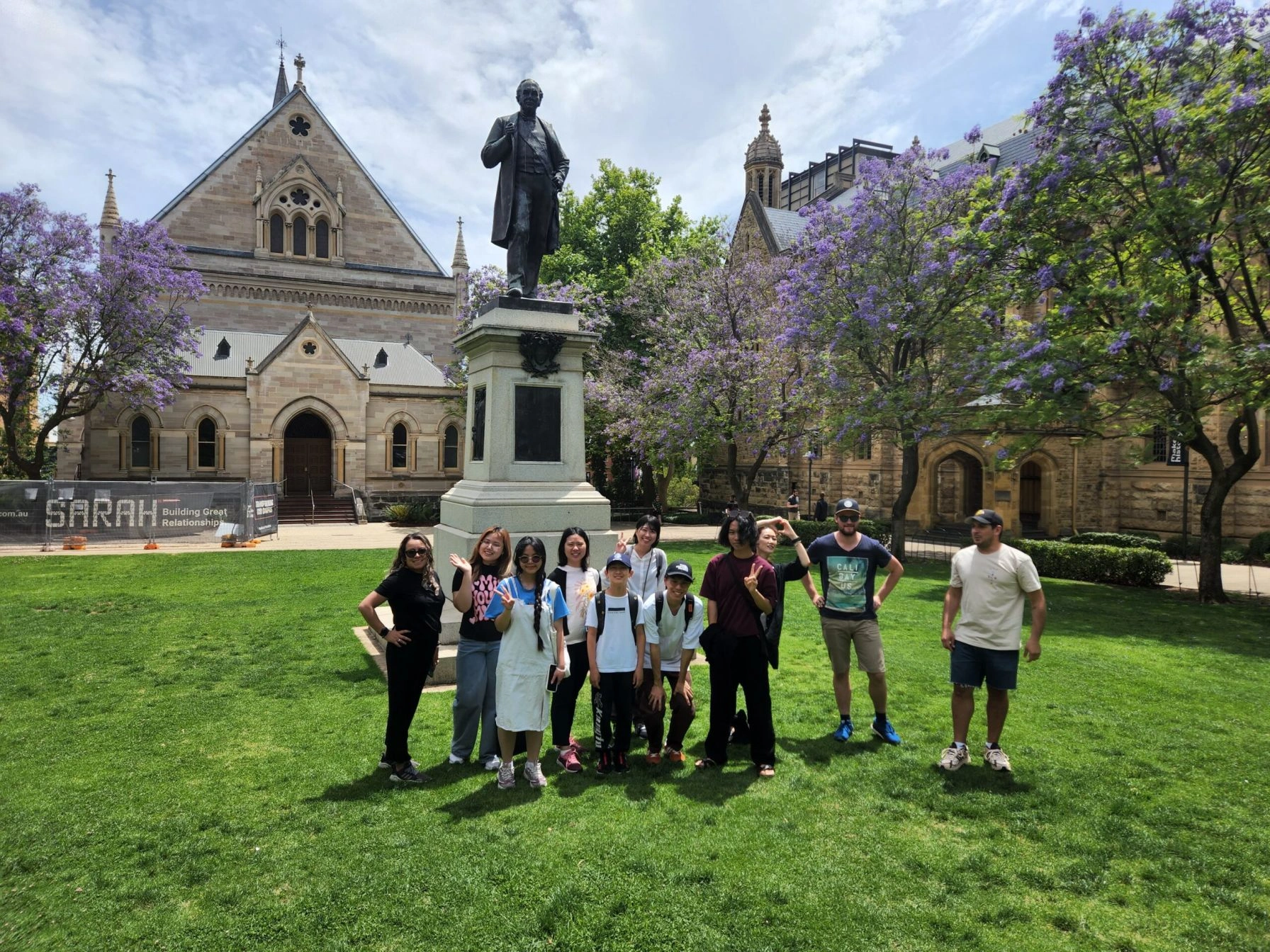
University campus tours. Guided visits to the University of Adelaide and Flinders University inspire secondary students and give them a clear, motivating vision of future study in Australia.
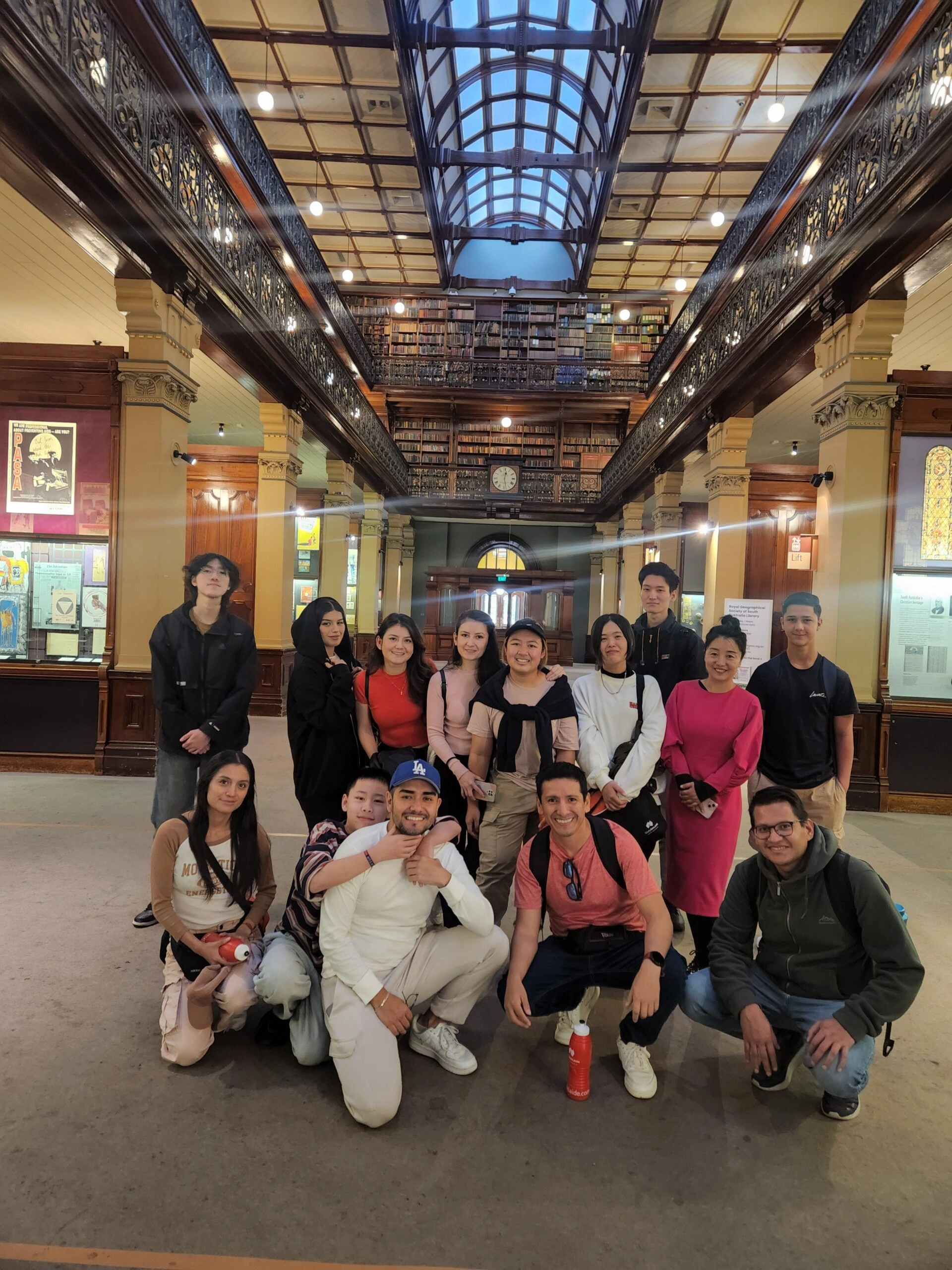
Glenelg Beach. Adelaide’s most popular beach is 20 minutes from the city by tram. Students swim, enjoy fish and chips, and have what most would describe as their first truly Australian afternoon.
Barossa Valley. An hour from Adelaide, one of the world’s most celebrated food and wine regions. Farm visits, local produce tasting, and sweeping countryside make for a memorable and culturally rich group day trip.
Port Adelaide. The historic harbour precinct offers maritime history, street art, and a mix of cafes and cultural institutions in a setting that feels distinctly South Australian.
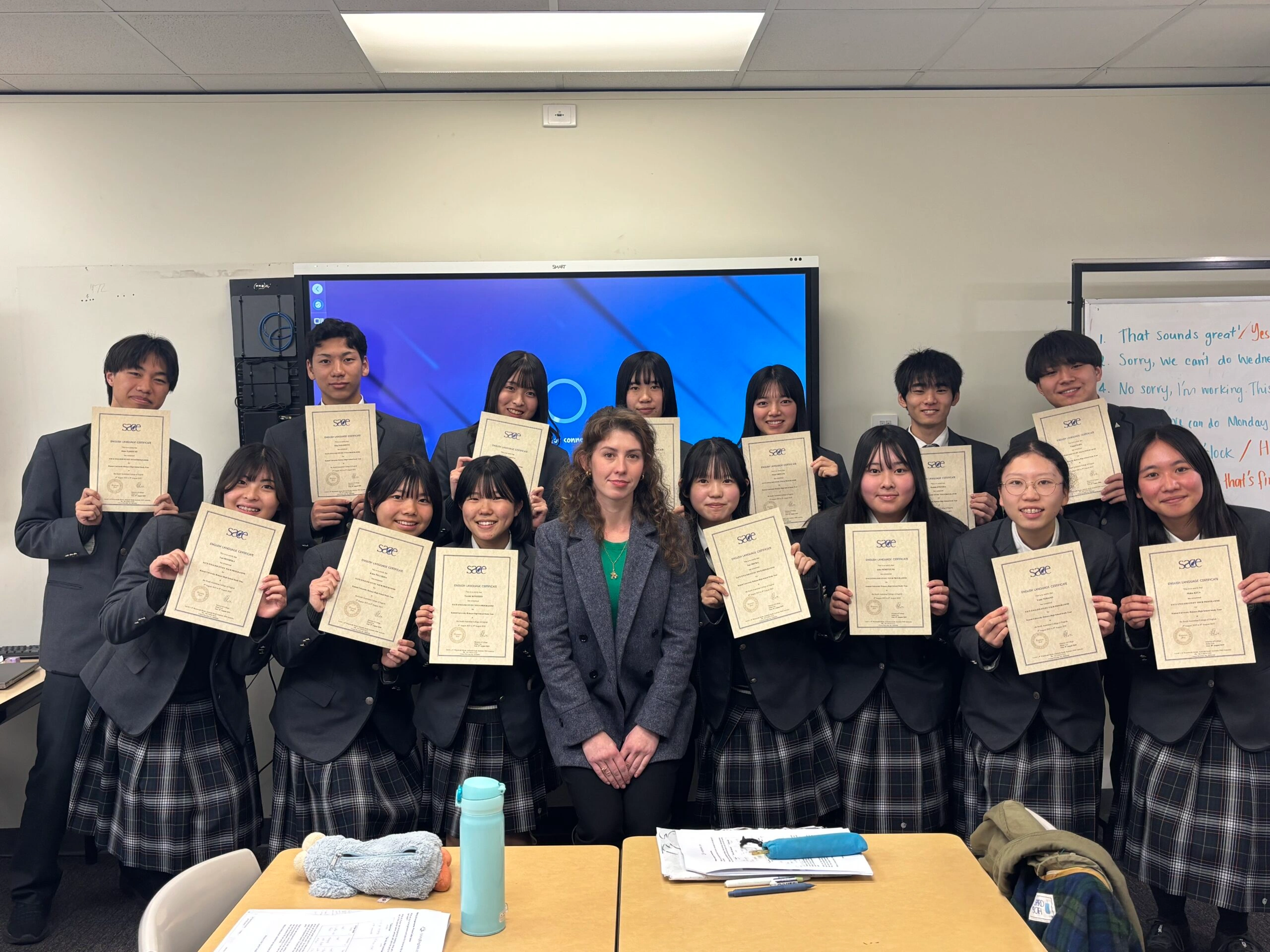
At the conclusion of the programme, every student receives a certificate of participation, a formal record that schools can include in student portfolios and academic files.
Use this comparison to assess whether a SACE study tour aligns with your institution’s objectives:
Feature | SACE Study Tour | General English Course |
|---|---|---|
Primary focus | Cultural immersion + English | Academic progression |
Group structure | Coordinated group programme | Individual enrolment |
Activities | Pre-arranged and supervised | Independent exploration |
Accommodation | Primarily homestay | Homestay or independent |
Duration | Typically, two to four weeks | One week to 48 weeks |
Certificate | Certificate of participation | Academic transcript |
For institutional partners, planning for a mid-year or end-of-year intake should begin at least six to eight months in advance. This allows adequate time for visa processing, flight bookings, and customisation of the activity itinerary to your group’s age range, English proficiency level, and specific learning goals.
At SACE, we work closely with programme coordinators and group leaders to manage every logistical detail: from airport welcome to daily supervision, welfare support, and programme reporting. Every study tour is customised to the group. There is no one-size-fits-all package.
Best times to visit Adelaide:
Mid-year (June to August): Aligns well with Northern Hemisphere school calendars. Adelaide winters are mild and dry, typically 8 to 16 degrees Celsius. Ideal conditions for walking excursions, outdoor activities, and city exploration.
Summer (December to February): Suits Southern Hemisphere school schedules. Warmer temperatures, full beach access, and a vibrant city atmosphere make this a popular window for groups from Asia and Europe.
Adelaide is genuinely a year-round destination, with each season offering something distinct for student groups.
Student visa requirements for Australian study tours (Department of Home Affairs)
Generally, a study tour group requires a minimum of 10 students. We accommodate larger cohorts with tiered activity schedules and, where needed, separate class groups by proficiency level.
No. SACE caters to all levels, from Elementary to Advanced. Every student completes a full placement assessment on arrival and is grouped according to their proficiency. Mixed-level school groups are fully accommodated, which is one of the practical advantages of choosing SACE.
Most programmes run for two to four weeks, though duration can be adjusted to fit your school’s holiday calendar and programme objectives. Talk to our team about the right length for your group.
Adelaide is a year-round destination. The mid-year window (June to August) is popular with Northern Hemisphere school calendars; Adelaide winters are mild and dry, typically 8 to 16 degrees Celsius, making the city ideal for outdoor activities. Summer programmes (December to February) suit Southern Hemisphere schools and offer warm weather and beach access throughout.
SACE provides dedicated welfare officers throughout the programme, ongoing support for accompanying group leaders, established emergency contact protocols communicated before departure, and accommodation through carefully selected homestay families or approved group options. All arrangements comply with Australian National Code standards for international student welfare.
Visa requirements vary by nationality and programme length. We recommend that schools and coordinators check directly with the Australian Government’s official immigration website for the most current requirements. SACE can provide supporting documentation as needed.
Australian visa requirements
SACE has been welcoming international students to Adelaide since 1987. Nearly four decades of experience mean we know how to design a programme that delivers real language growth, genuine cultural confidence, and lasting memories for student groups.
We do not offer generic packages. Every SACE study tour is built around your school’s goals, your students’ proficiency levels, and your institution’s welfare requirements.
Do not settle for a travel package dressed up as an educational experience. Work with our study tour team to design a programme that achieves something real.
Speak to our study tour team
Please Login To Add Wishlist